
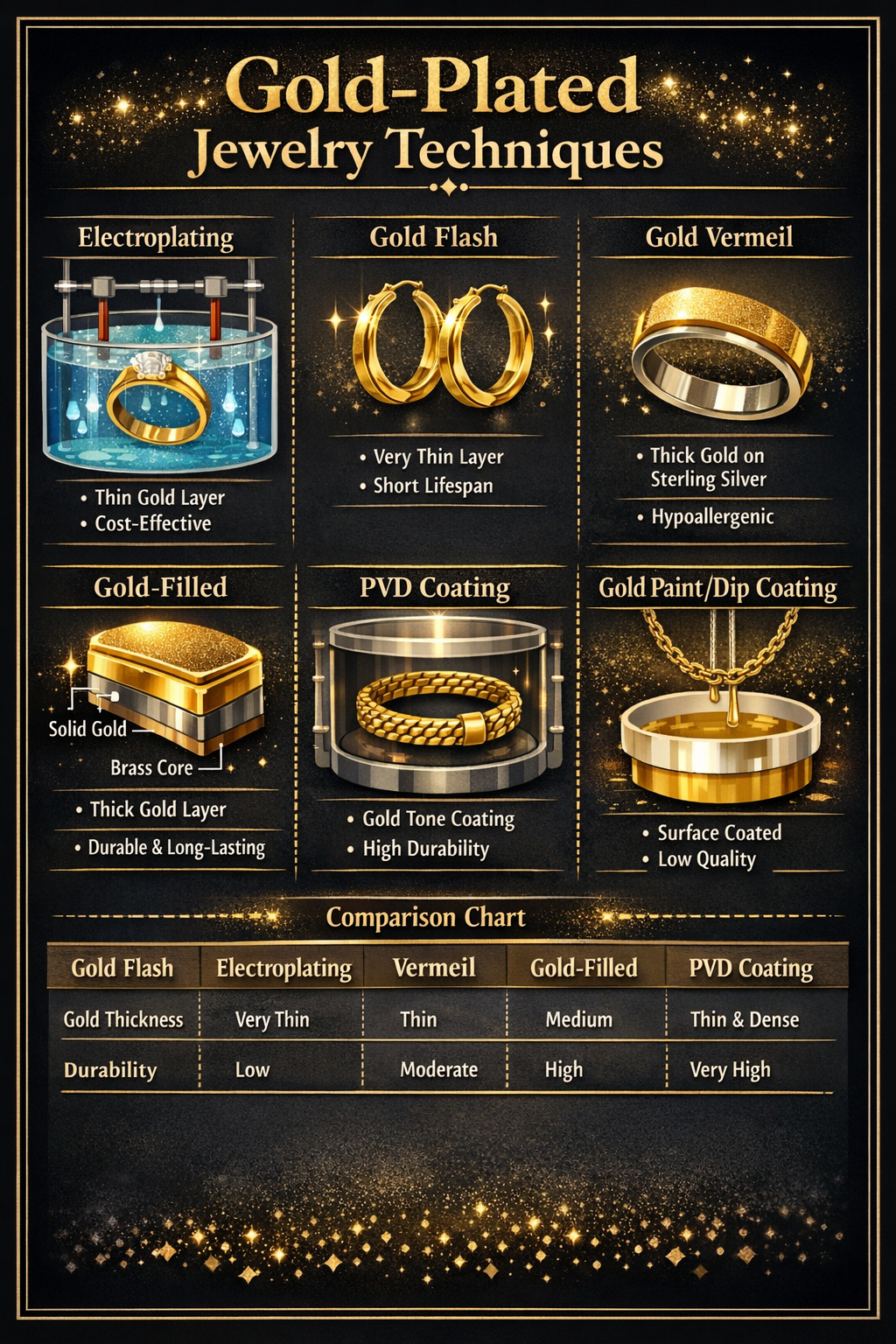

Gold-plated jewelry plays a central role in the fashion accessories market, offering the visual appeal of gold at a fraction of the cost of solid precious metal. However, not all gold-plated jewelry is created equal. The durability, appearance, and value of a finished piece depend heavily on the plating method used.
This article outlines the primary gold-plating techniques used in fashion jewelry, explains how each process works, and highlights the practical differences between them.
1. Electroplating (Traditional Gold Plating)
How It Works
Electroplating is the most common method used in fashion jewelry. A base metal—typically brass, copper, or stainless steel—is submerged in an electrolyte solution containing gold ions. An electric current causes the gold to bond to the surface of the base metal.
Key Characteristics
- Gold thickness typically ranges from 0.1 to 1 micron in fashion applications
- Can be layered over nickel-free or palladium barriers
- Allows for color variation (yellow, rose, champagne gold)
Advantages
- Cost-effective and scalable
- Smooth, uniform finish
- Suitable for intricate designs
Limitations
- Thin gold layer wears off over time
- Susceptible to fading with frequent contact, moisture, and friction
Best Use
Trend-driven jewelry, seasonal collections, and cost-sensitive designs.
2. Flash Plating (Gold Flash)
How It Works
Flash plating is a variation of electroplating but uses an extremely thin gold layer—often less than 0.1 micron.
Key Characteristics
- Minimal gold content
- Primarily aesthetic rather than protective
Advantages
- Very low cost
- High initial shine
Limitations
- Extremely short lifespan
- Rapid wear and discoloration
Best Use
Ultra-fast fashion pieces or jewelry designed for short-term use.
3. Gold Vermeil
How It Works
Gold vermeil is electroplated gold applied over a sterling silver base, rather than brass or copper. In many markets, vermeil must meet minimum thickness standards (commonly 2.5 microns).
Key Characteristics
- Sterling silver core
- Thicker gold layer than standard plating
Advantages
- Hypoallergenic compared to base metals
- Longer-lasting than typical fashion plating
- Higher perceived value
Limitations
- Higher cost than brass-based plating
- Still subject to wear over time
Best Use
Premium fashion jewelry and bridge-to-fine collections.
4. Gold-Filled (Rolled Gold)
How It Works
Gold-filled jewelry is created by mechanically bonding a thick sheet of gold to a base metal (usually brass) using heat and pressure. The gold content must legally represent a significant percentage of the item’s total weight.
Key Characteristics
- Gold layer is substantially thicker than plating
- Gold is bonded, not deposited
Advantages
- Exceptional durability for non-solid gold
- Can last decades with proper care
- Resistant to peeling and flaking
Limitations
- Limited design flexibility
- Higher material and production costs
- Not suitable for very delicate components
Best Use
Long-lasting everyday jewelry positioned between fashion and fine.
5. PVD Gold Coating (Physical Vapor Deposition)
How It Works
PVD is a vacuum-based process where gold-colored metal compounds are vaporized and bonded to the jewelry surface at a molecular level. While often referred to as “gold,” the coating is typically a gold-tone alloy rather than pure gold.
Key Characteristics
- Extremely thin but dense coating
- Often applied to stainless steel
Advantages
- Superior scratch and corrosion resistance
- Long-lasting color stability
- Hypoallergenic when paired with stainless steel
Limitations
- Not solid gold or true gold plating
- Color tone may differ from traditional gold
Best Use
Modern, minimalist designs and performance-focused fashion jewelry.
6. Dip Coating and Decorative Gold Paints (Less Common)
How It Works
Some low-cost jewelry uses gold-colored lacquers or coatings rather than true metal plating.
Key Characteristics
- No metallic bonding
- Surface-level coloration only
Advantages
- Extremely inexpensive
- Fast production
Limitations
- Poor durability
- Not considered true gold jewelry
Best Use
Costume jewelry with very limited wear expectations.
Comparing the Techniques at a Glance
| Method | Gold Thickness | Durability | Cost Level | Typical Base |
|---|---|---|---|---|
| Flash Plating | Very thin | Very low | Very low | Brass |
| Electroplating | Thin | Moderate | Low | Brass, copper |
| Vermeil | Medium | Moderate–High | Medium | Sterling silver |
| Gold-Filled | Thick | High | Medium–High | Brass |
| PVD Coating | Thin but dense | Very high | Medium | Stainless steel |
Final Considerations
When selecting a gold-plating method, brands and consumers should consider:
- Expected lifespan of the jewelry
- Frequency of wear
- Skin sensitivity requirements
- Price positioning and target market
Understanding these techniques allows for better product development decisions and more transparent communication with customers—both essential in today’s informed fashion jewelry market.