
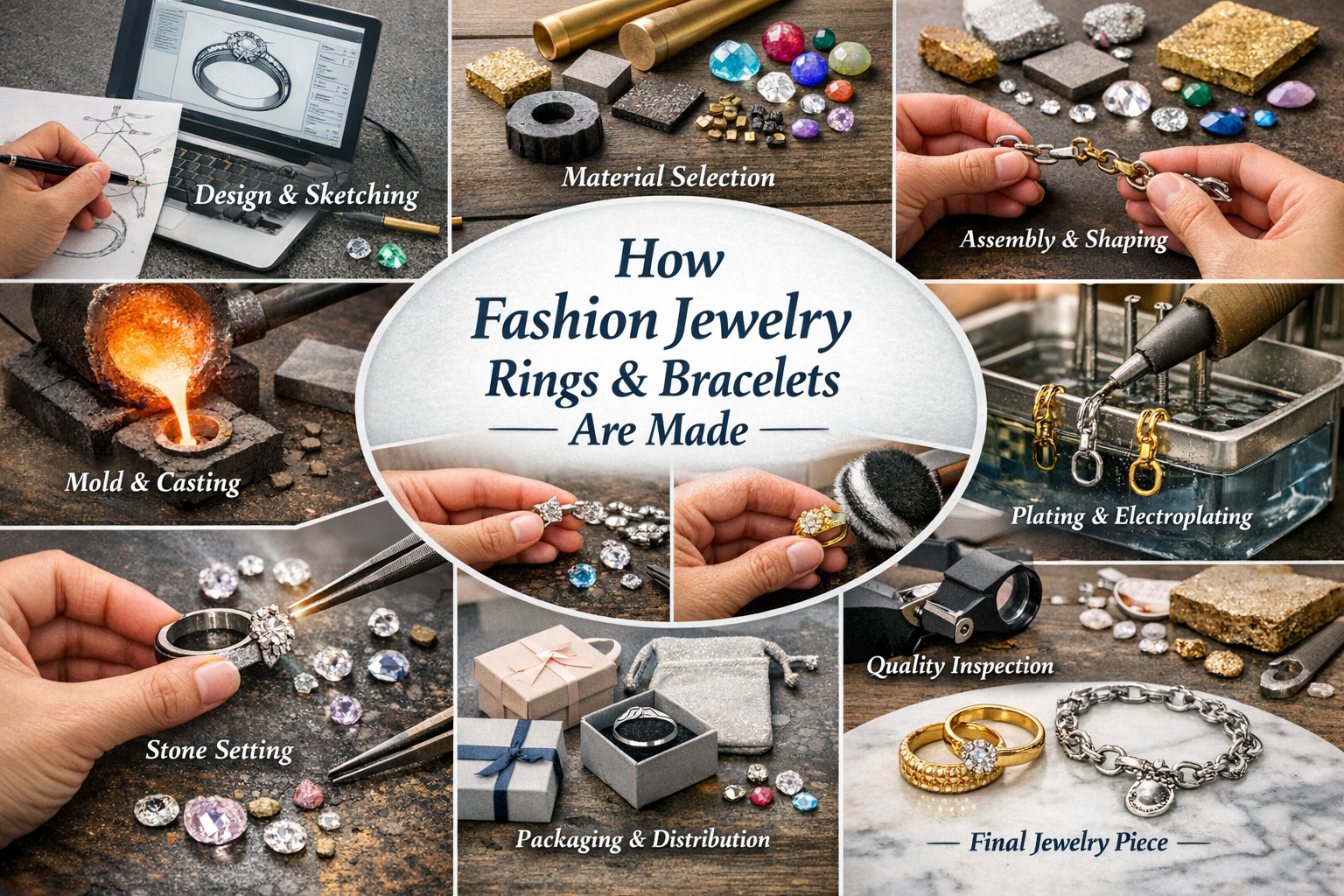

How Fashion Jewelry Rings and Bracelets Are Made: Step-by-Step
Fashion jewelry is designed to be stylish, accessible, and affordable. Unlike fine jewelry made from solid gold or precious gemstones, fashion jewelry rings and bracelets are manufactured using cost-effective materials and efficient production techniques—without sacrificing design appeal.
Below is a clear, behind-the-scenes look at the main steps involved in manufacturing a fashion jewelry ring or bracelet, from concept to finished piece.
1. Design & Trend Development
Every piece starts with a design.
For fashion jewelry, designers closely follow:
- Seasonal fashion trends
- Popular colors, shapes, and textures
- Social media and runway inspiration
Designs are usually created using:
- Hand sketches
- CAD (Computer-Aided Design) software for precise dimensions
The goal is to create a design that is visually appealing, easy to produce, and cost-efficient at scale.
2. Material Selection
Affordable jewelry relies on non-precious materials that are durable and easy to work with.
Common base materials include:
- Zinc alloy
- Brass
- Copper
- Stainless steel (for slightly higher durability)
Decorative elements may include:
- Glass crystals
- Cubic zirconia
- Acrylic stones
- Resin or enamel
These materials allow manufacturers to keep prices low while offering a wide variety of styles.
3. Mold Making or Stamping Preparation
Depending on the design, one of two main techniques is used:
Casting (Most Common for Rings & Detailed Designs)
- A mold is created from the CAD design
- Molten metal alloy is poured into the mold
- Once cooled, the raw metal shape is released
Stamping (Common for Bracelets & Simple Shapes)
- Metal sheets are cut and pressed using steel dies
- This method is faster and ideal for minimalist designs
Both methods are chosen based on design complexity and production volume.
4. Assembly & Shaping
After casting or stamping, the piece is refined.
This step may include:
- Soldering parts together (for multi-piece bracelets)
- Bending and shaping to correct size
- Smoothing rough edges
For bracelets, clasps, chains, or links are attached during this stage.
5. Stone Setting & Decorative Details
If the design includes stones or embellishments, they are added next.
Common techniques:
- Glue setting (used for fashion jewelry to reduce cost)
- Bezel or prong-style settings for higher-end costume pieces
- Hand-applied enamel or color coatings
This step is crucial for visual impact and requires careful quality control.
6. Polishing & Surface Finishing
To give the jewelry its final look, the surface is treated.
Finishing methods include:
- Mechanical polishing for shine
- Matte or brushed textures
- Antique or oxidized effects for vintage styles
The finish determines whether the piece looks glossy, soft, or intentionally distressed.
7. Electroplating (Gold, Silver, or Color Finish)
Fashion jewelry is typically plated, not solid metal.
Common plating options:
- Gold-tone
- Silver-tone
- Rose gold
- Black, gunmetal, or mixed finishes
Electroplating creates a thin decorative layer that enhances appearance while keeping the jewelry affordable.
A protective coating is often added to help reduce tarnishing.
8. Quality Control & Inspection
Before packaging, each piece is checked for:
- Proper stone placement
- Secure clasps and joints
- Smooth surfaces (no sharp edges)
- Consistent color and finish
Quality checks ensure that customers receive jewelry that looks good and wears comfortably.
9. Packaging & Distribution
Finally, the jewelry is cleaned and packaged for sale.
Typical packaging includes:
- Polybags or pouches
- Branded cards
- Jewelry boxes for premium fashion collections
From there, the pieces are ready for shipping to retailers or directly to customers.
Fashion Jewelry: Style Made Accessible
The manufacturing process behind fashion jewelry rings and bracelets is all about balancing style, efficiency, and affordability. By using smart materials and streamlined production methods, manufacturers can offer trend-driven designs at accessible prices—perfect for everyday wear and seasonal updates.
Fashion jewelry proves that beautiful design doesn’t have to be expensive.